

Holidays in Lithuania
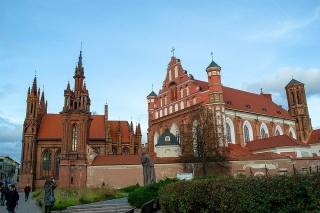
Lithuania’s turbulent history can still be seen in its many festive customs. Due to centuries of close political unity with Poland, the country remained Catholic even after the Reformation, while the other Baltic states, which were German in character, became Protestant. For example, the holiday calendar includes the Assumption of the Virgin Mary and All Saints’ Day, as well as the traditional Midsummer Festival and national patriotic holidays from older to recent history.
On national public holidays, shops have limited opening hours. If it happens that a public holiday falls on Sunday, the following Monday is free of work.
Overview
New Year’s Day – January 1
Lithuanian State Restoration Day /1st Independence Day – on February 16
Day of Restoration of Lithuanian Independence/ 2nd Independence Day – on March 11
Easter Sunday – Sunday after the first full moon in spring
Easter Monday – one day after Easter Sunday
Labor Day – on May 1
Johannistag/ Midsummer (“Joninės”/ “Rasos”) – on June 24
Eigen State Day/ anniversary of the coronation of King Mindaugas – on July 6
Ascension Day – on August 15
All Saints Day – on November 1
1st Christmas Day – on December 25
2nd Christmas Day – on December 26
Worth knowing about selected holidays
Independence days
Lithuanians celebrate two independence holidays. After forming a great empire with Poland in the late Middle Ages, much of Lithuania had fallen to the tsar by the end of the 18th century. The first commemorates Lithuania’s breakaway from the Russian tsarist empire on February 16, which was proclaimed in the wake of the October Revolution in 1918.
The second Independence Day commemorates the declaration of sovereignty from the Soviet Union on March 11, 1990. Lithuania led the way, becoming the first of the 15 Soviet republics to declare independence as a result of perestroika initiated by Kremlin leader Gorbachev.
A fact that was not accepted by Moscow without sanctions. First they imposed – unsuccessfully – an energy and economic blockade, finally culminating in the “Bloody Sunday of Vilnius”. When Soviet soldiers violently occupied the radio headquarters in Vilnius, 14 people were killed and 170 injured.
Nobel Peace Prize winner Michael Gorbachev later denied ever giving a shoot-to-kill order for Vilnius.
Own State Day and anniversary of the coronation of King Mindaugas
A third statehood day dates back to older history. It celebrates the anniversary of the coronation of Lithuania’s only king, Mindaugas, on July 6, 1253. It was thanks to him that the five principalities of Lithuania were united into a single state.
As in a drama by Shakespeare, the ruler was assassinated by his brother-in-law and nephew in 1263 after political entanglements.
On the 750th anniversary of the coronation, a monument to Mindaugas was unveiled in front of the National Museum in Vilnius in 2003. Incidentally, the king’s name is one of the most popular first names in Lithuania.
“Joninės”/ “Rasos”
Midsummer or St. John’s Day is a holiday in Lithuania, as in the other Baltic states, and as a summer solstice celebration it is one of the most popular, important and traditional of all. In the night from 23rd to 24th June the St. John’s fires burn. According to tradition from East Prussia, they are supposed to keep away thunderstorms, hailstorms and cattle deaths and bring good luck and health for the coming year.
Colorful traditional costumes, music, dancing and singing characterize St. John’s Day. According to ancient custom, people search at night for a fabled fern blossom, which is only open for a few hours and is said to bring not only wealth and luck, but also clairvoyance. On the shortest night of the year, when it hardly gets dark, the plants and water are believed to have healing and fruit-bearing powers.
hire car price comparison holidays Lithuania | information about holidays in Lithuania
Advisor Articles

How to protect yourself from potential hire car rip-offs!

Wet roads, new car: here are helpful tips!

Tips & tricks for hire car. What to look out for!

Is it possible to rent the hire car without a credit card?

Choosing the right rental vehicle from the hire car company.

How to protect yourself from a hire car theft

Break down with your holiday car? Here's how best to respond.

What to look for in a hire car accident

What insurance coverage you need when renting a car

Road trip Lithuania - A treasure chest of surprises