

Holidays in Portugal
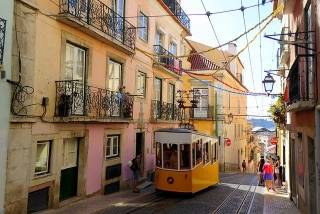
Portugal is located on the western edge of Europe and celebrates a number of public holidays each year. These include New Year’s Day, Good Friday, Easter, Freedom Day, Labour Day, the National Day, Assumption Day and Christmas. This article will not only inform you about the dates of the public holidays in Portugal, but also explain their meaning.
Overview
New Year’s Day – on January 1
Good Friday – two days before Easter Sunday
Easter Sunday – after the first full moon in spring
Easter Monday – one day after Easter Sunday
Freedom Day – on April 25
Labor Day – on May 1
National Day – on June 10
Ascension Day – on August 15
1st Christmas Day – on December 25
Worth knowing about the holidays
New Year
Also in Portugal, the new year always begins on January 01. Among Catholics, New Year is also known as the “Day of Mary, Mother of God”. The greeting of the new year is different depending on the region of the country. On the island of Madeira, the people in Funchal set off a gigantic fireworks display. The colourful celestial spectacle is one of the most beautiful in the world.
The Portuguese in the capital Portugal celebrate the beginning of the year both in the “Parque das Nações” and on the “Praça do Comércio”. The fireworks and rousing concerts make the start of the new year an unforgettable experience here as well.
The inhabitants of Portugal also like to travel to the “Serra de Estrela” mountains at this time. The region is usually covered in snow at the turn of the year and traditions are kept. On this occasion, 12 raisins or grapes are eaten. With new clothes and with clattering pots, the new year is welcomed with dignity.
Charif Friday
Kariffritag is a Catholic, Protestant and Anglican day of remembrance. On this day, people commemorate the crucifixion of Jesus Christ. On Good Friday, the Portuguese observe various customs. Among other things, they abstain from meat and instead fish comes on the table.
Easter
Easter occurs on a different date each year, as it is a movable feast. Easter Sunday is dependent on the first full moon in spring and is consequently celebrated on the first Sunday after the full moon. Easter is the celebration of the resurrection of Jesus Christ. However, death does not mean the end, but rather it represents the beginning of a new life.
Freedom Day
April 25 is Freedom Day in Portugal. On this day, the Portuguese commemorate the Carnation Revolution of April 25, 1974. The leftist uprising by the Portuguese army was directed against Estado Novo and the authoritarian dictatorship that came with it. During the revolution hardly any blood flowed and there were four deaths. The name Carnation Revolution comes from the carnations in the rifle barrels of the rebellious soldiers. These flowers were given to them in celebration of the revolution’s progress during a popular festival.
Labor Day
Labor Day takes place every year on May 01. The “workers’ movement’s day of struggle” dates back to as early as the 19th century, when people campaigned and demonstrated for an eight-hour workday. Unfortunately, workers’ demonstrations ended in deaths. To this day, there are protest marches on “Labor Day,” but fortunately no one has to fear for their lives anymore.
National Day – Portugal Day
The Portuguese national holiday is also known as Camões Day. It is celebrated annually on June 10. On this day in 1580, the important Portuguese national poet and writer Luis de Camões died. The capital city of Lisbon celebrates not only Portugal Day but also its city holiday in honour of the poet on this day.
Marian Ascension
August 15 is one of the Solemnities of the Roman Catholic Church. It is the feast day of the “Assumption of the Blessed Virgin Mary” and the “Immaculate Conception” respectively. On this day, the Assumption of Mary into heaven is commemorated.
Christmas
On Christmas, only December 25 is recognized as a legal holiday. The feast has a very great importance for most Catholics and is also celebrated in Portugal in the family circle. In the houses and apartments of the families there is almost never a real Christmas tree, but usually a plastic one.
The festive meal often consists of boiled potatoes with olive oil as well as stockfish with cabbage. A popular dessert is pudding with cinnamon and sugar and, of course, a Christmas cake, called king cake, cannot be missed. This is a cake similar to a stollen, which is prepared with sugared fruits and nuts. According to an old tradition, the person who has a dried bean in the cake has to get the king cake for the next Christmas. Of course, there are also presents in Portugal. The packages are presented at midnight or on December 25.
As in Germany, the cities are aglow with festive lights at this time of year and there is often a decorated Christmas tree or pretty nativity scene in the market square. In the provinces of the country, people light a fire in the marketplace for midnight mass. Christmas is also one of the most popular celebrations in Portugal.
hire car price comparison
Advisor Articles

How to protect yourself from potential hire car rip-offs!

Tips & tricks for hire car. What to look out for!

Extreme heat - Often a particular challenge for hire cars.

Is it possible to rent the hire car without a credit card?

Choosing the right rental vehicle from the hire car company.

How to protect yourself from a hire car theft

Break down with your holiday car? Here's how best to respond.

What to look for in a hire car accident

What insurance coverage you need when renting a car

Exploring Portugal by hire car